Domenico Gnoli is one of the dedicated painters of the postwar period. Perhaps because he died at 36? I approached his works with immediate melancholy, as if every canvas already knew its own ending. That knowledge changes the viewing experience. His paintings stop feeling decorative and begin to feel terminal, almost archaeological.
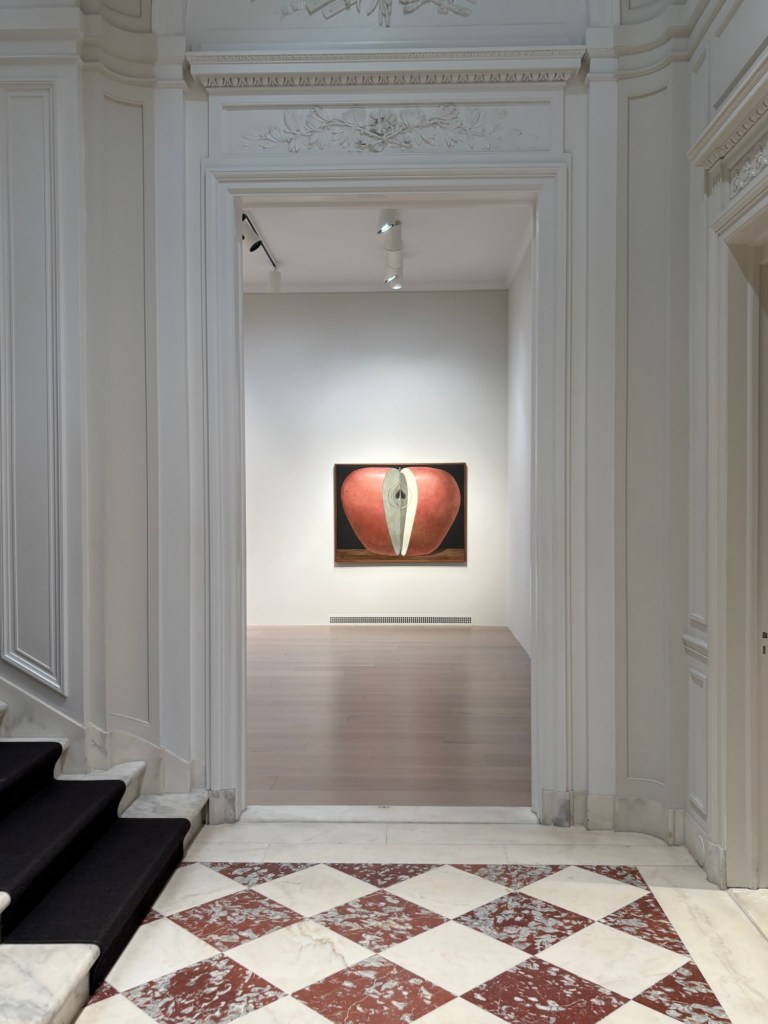
At first comparison was about René Magritte. The enlarged objects, the isolation of details, the calm theatricality – all of this creates a similar psychological tension. But Gnoli is heavier, more concrete. Magritte paints ideas, and Gnoli paints matter and tiny details.
After WWII many artists became obsessed with the physical surface of painting itself. Antoni Tàpies mixed dust, marble powder, soil, sand, and raw material directly into the canvas, turning painting into something closer to a wall, a ruin, or an excavated object. Gnoli arrived at materiality differently, but with equal force. His surfaces possess an almost architectural density. Hair, pillows, shirts, mattresses, ropes, buttons, apples – everything appears enlarged to the point where it becomes monumental.
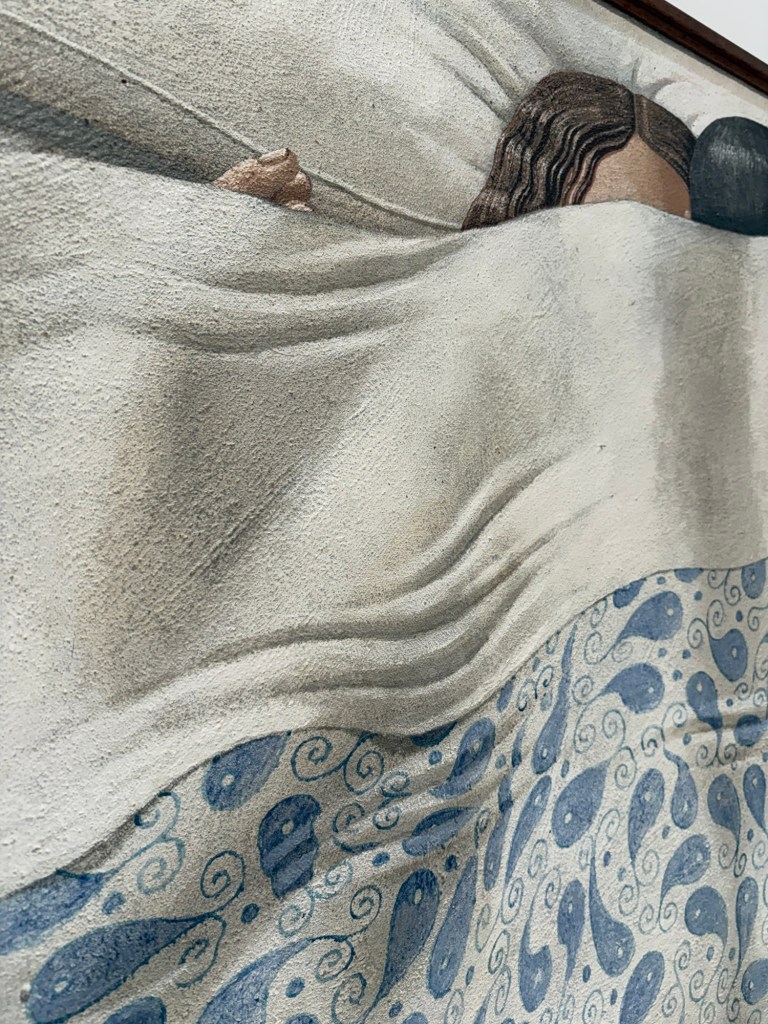
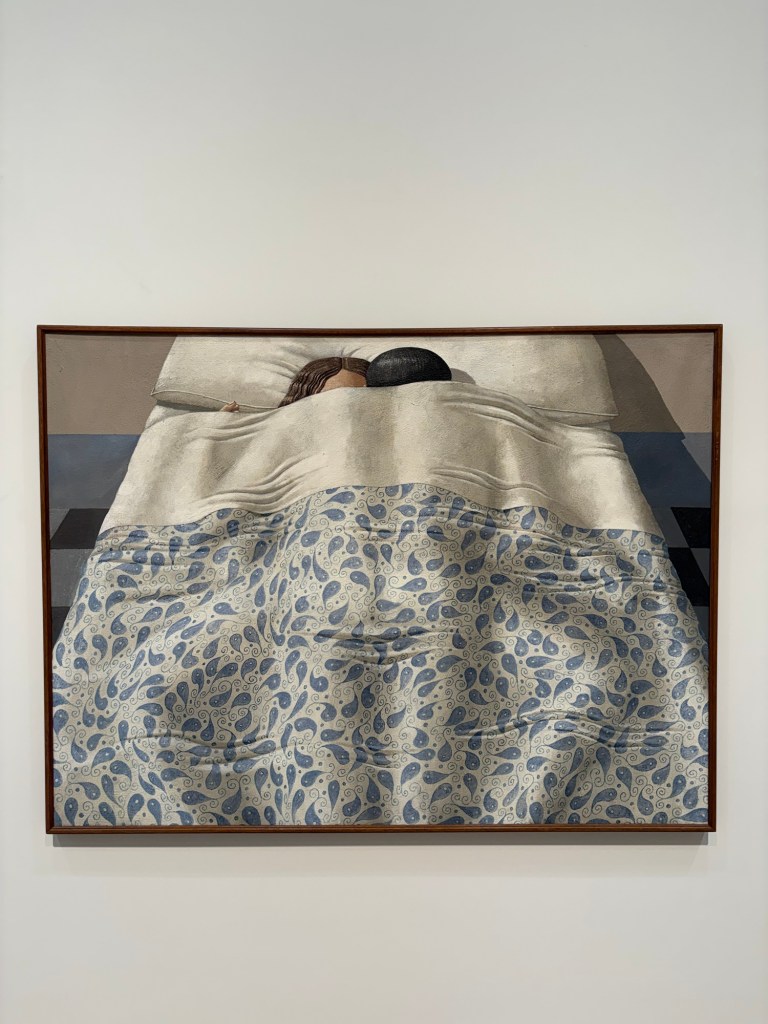
The sand mixed into his paint gives the works their peculiar tactile gravity. His paintings do not merely depict fabric or objects, they make them feel built. A bed becomes a structure. A jacket resembles concrete. The canvases often feel closer to sculpture or fragments of buildings than traditional painting.
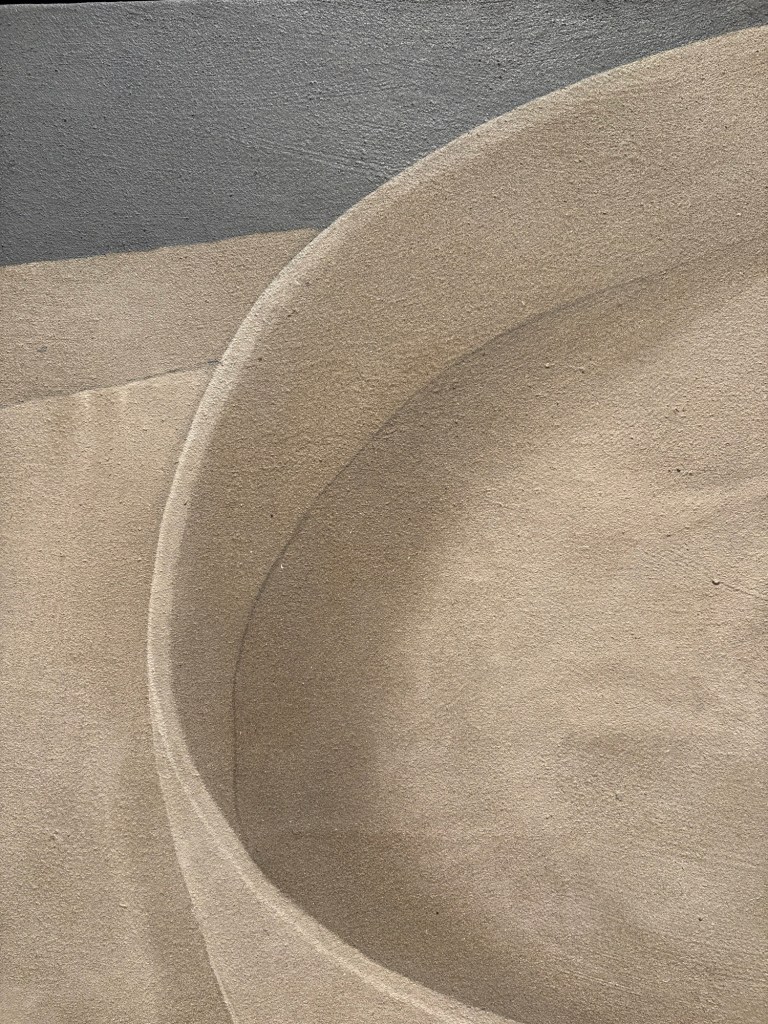
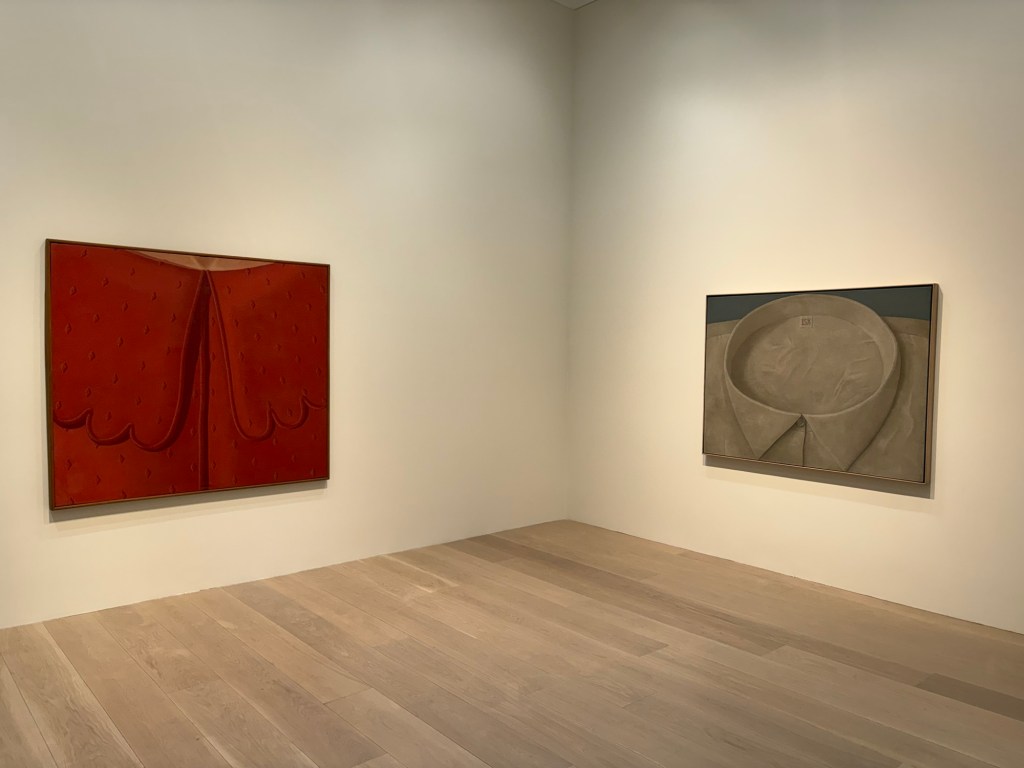
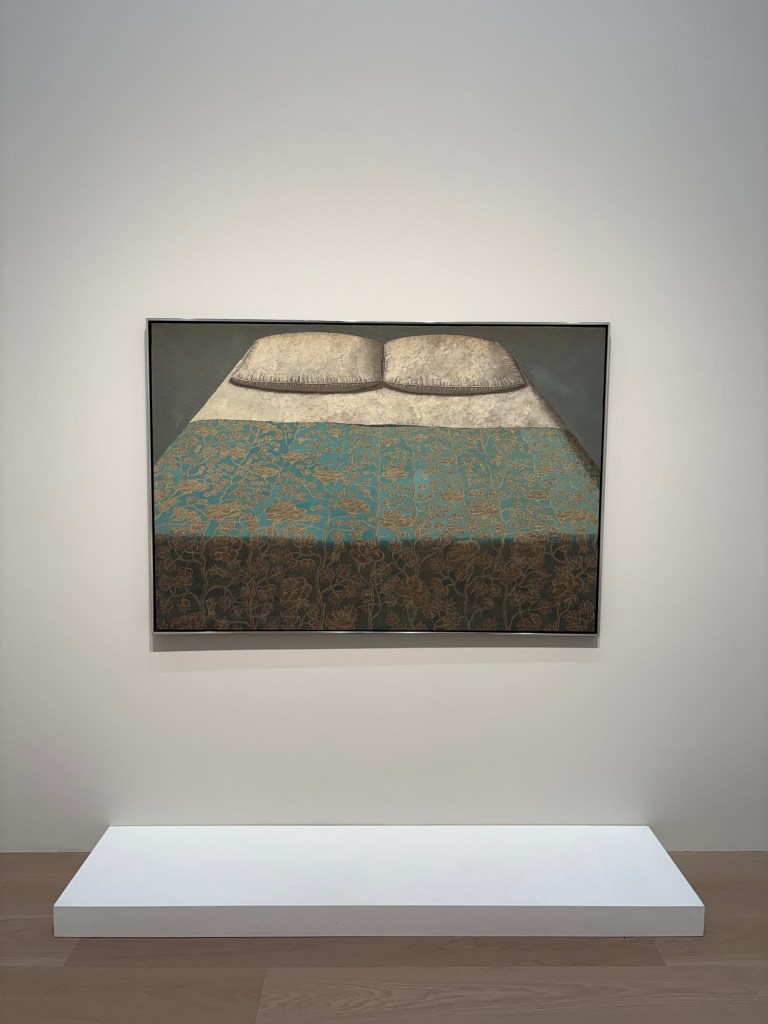
There is also something deeply elegant about him. Before fully dedicating himself to painting, Gnoli worked as an illustrator and stage designer, and that sensitivity to details never disappeared. He understood clothing not simply as fabric, but as identity, class, theatre, seduction. The precision with which he painted ties, seams, hairstyles, or woven textures reveals deep obsession with presentation, surface, objects, style.
In 1969 Gnoli discovered he had cancer. During the final year of his life he worked intensely, producing dozens of paintings while moving between New York, Paris, and Mallorca. Shortly after a major solo exhibition in New York, he died at the age of 36. That is the saddest part of his work: the feeling that he had only just begun to discover the full scale of his language.
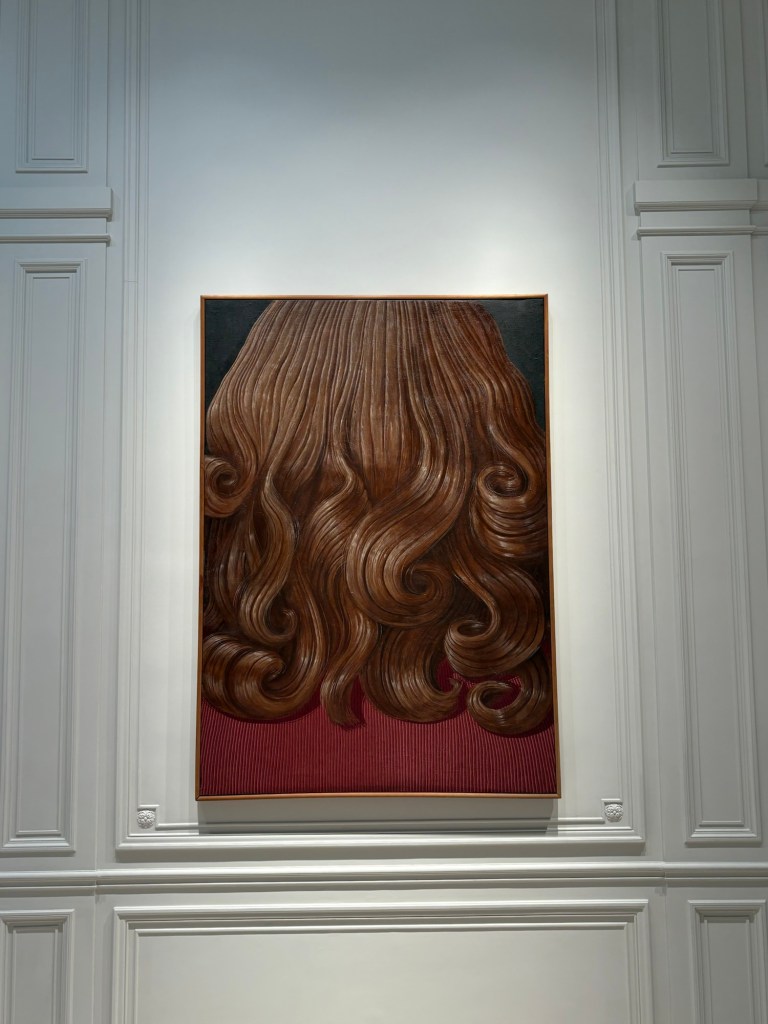
The paintings themselves feel unfinished in the most tragic sense – not incomplete, but interrupted.
