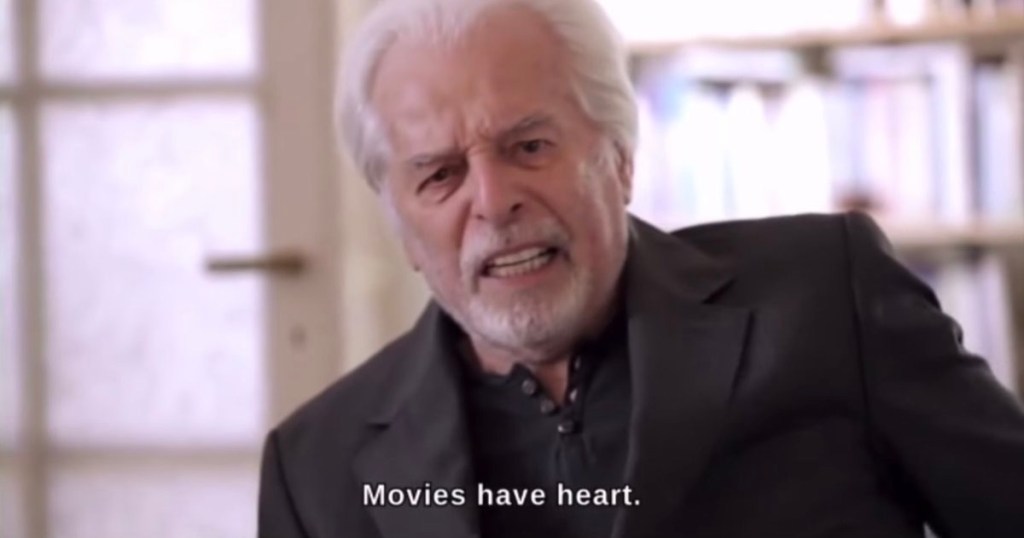
Alejandro Jodorowsky turned 97 this week. He is lucid, and still giving interviews. When El País recently asked him what his greatest achievement in life was – and they asked this earnestly, pen in hand, probably expecting something about cinema or psychomagic or the collective unconscious, he said: tying his shoelaces with his teeth. He takes the lace in his mouth and makes a very beautiful knot. Like a rose. Best thing he’s ever done, apparently. The man who made El Topo would like you to know that El Topo is not even in his top five. Happy birthday, I guess.
Here is my problem. I have, for approximately fifteen years, built a small but load-bearing part of my identity around having seen El Topo. Not just seen it – survived it. Watched it multiple times. Been scared by it every single time, which I present not as a character flaw but as evidence of my sensitivity to art. I have mentioned it at dinner parties. I have mentioned it to people who did not ask. I once mentioned it to my family, which was a mistake I will not make twice, because my brother laughed – not the polite laugh of someone who doesn’t understand yet, but the immediate, confident laugh of someone who has decided, as a life philosophy, never to understand – and he still probably laughs about it, possibly at Christmas, possibly when I’m not there.
The point is: El Topo mattered to me. It divided me from people I loved along a line I hadn’t known existed. It was, I told myself, the story of the world.
And I assumed, somewhere in the back of my mind, that its creator was dead. Not because I had any evidence – just because it seemed narratively correct. Some artists are too genuinely strange to be allowed to continue into old age. Pasolini was murdered near a beach. This is what happens. You make something that touches the raw nerve of human violence and then the universe, embarrassed, corrects the situation.
Jodorowsky made El Topo in 1970 and then, in my imagination, tastefully ceased to exist. He did not. He made more films. He wrote comics. He developed an entire therapeutic practice based on healing ancestral trauma through theatrical ritual, which is either the most profound thing I’ve ever heard or the most expensive dinner party game, and I’ve been unable to decide for years. He is 97. He is tying things with his teeth.
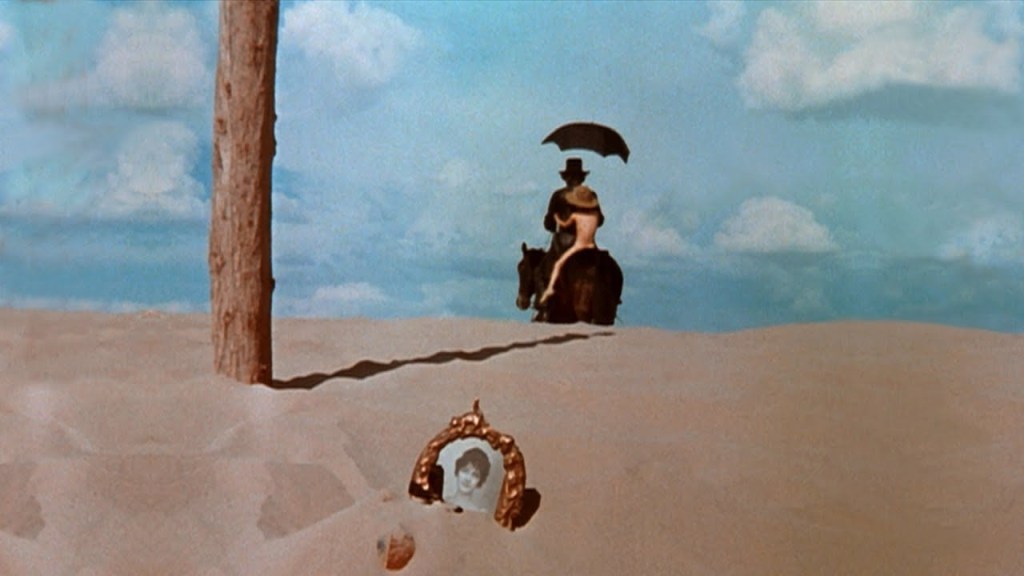
Now, about the film itself – because I should probably justify why I’ve been dining out on this for fifteen years. El Topo begins with Jodorowsky riding through a desert in all black, his young son naked behind him, corpses everywhere, on his way to kill some bandits. The child watches. Nobody explains why the child is there. Nobody explains anything. Jodorowsky is not in the business of explanation, he is in the business of putting something in front of you that your brain cannot file anywhere and then watching what happens to your face.
What happens is: violence, blood, Christian imagery deployed with the subtlety of a man who has never heard the word subtle and would not care for it if he had, a man who lives alone in the desert and destroys himself, a pool of blood that means something I have spent fifteen years trying to articulate at dinner parties.
Fernando Arrabal was his friend. Roland Topor was his friend. These were men who understood that surrealism’s real subject was never the floating clocks – it was what was screaming underneath them. Jodorowsky took that scream and pointed it directly at the audience, and the audience, in 1970, did not know what to do with it, and I, watching it alone on a laptop in 2009, also did not know what to do with it, and I have been doing something with it ever since, which is: telling people about it.
This is, I now realize, the entire thing. El Topo didn’t make me a deeper person. It made me someone who tells people about El Topo.
And Jodorowsky – who has had 97 years to think about this – already knew.
“Politics is not my reality,” he told an interviewer recently. “Neither is religion. If God exists, he believes in me.” He said he is a Jew because he was born one, but he isn’t, really. He said his greatest achievement is a knot that looks like a rose. He said all of this with the complete calm of a man who made a film that scared me eleven times and then moved on entirely.
The film is not the story of the world. The film is not the story of Jodorowsky. The film is the story of a man who takes himself extremely seriously in a desert until he doesn’t have to anymore.
