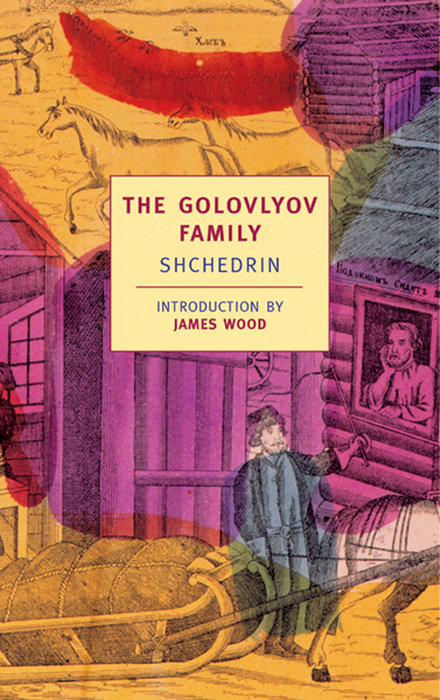
It would be best for all readers to refrain from writing reviews of Saltykov-Shchedrin’s greatest work, and instead leave ellipses or blank spaces in place of comments. The book’s magic, it seems to me, forbids anything in the so-called social sphere from exchanging any words among themselves. By chance, I managed to read the book to the end, although I tried to abandon it all the time.
Perhaps at that moment I was too cheerful and managed to hold on until the end. Still, I advise everyone not to finish it, as “The Golovlyov Family” devastates and empties you, as if you went traveling only to have all your belongings stolen at the station upon arrival, as if your grandfather gave you his precious watch that you had long desired, only to crush it with his boot right away, or as if you were imprisoned for 17 years for no reason, and so on. Many similar analogies can be invented, but I realize they cannot describe all the horror I understood after reading, especially not with metaphors.
The essence can only be grasped if you imagine two people reading this book side by side for days, and then simply looking at each other—just one empty glance is enough.
Considering the fact that towards the end of the novel, Saltykov-Shchedrin astonishingly describes the burden of human renewal—i.e., “becoming who you truly want to be”—showing that, firstly, a person is incapable of renewing themselves independently, and secondly, that the people who served as the soil for his (the person’s) upbringing made this renewal unbearably impossible, it is best to immediately follow this book with a few positive, dreamy, humanistic novels, so as not to lose your mind entirely from the total injustice and senselessness of human existence.
June 2014
