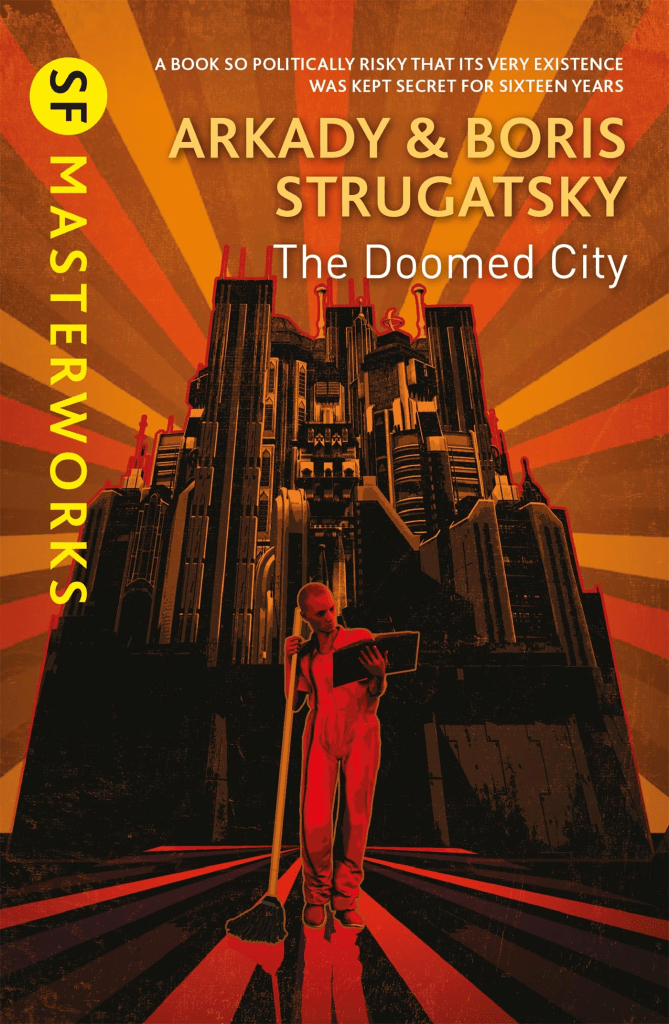
Perhaps this is the saddest book among all so-called social science fiction works. It is also the most shrouded in mystery, the most sorrowful and enigmatic of all the writings by the Strugatsky brothers.
For the perfect effect, it is best to read “The Doomed City” for about thirty minutes a day, preferably near some coal cuts and mines, factories (industrial sites in general). I strongly recommend reading it at night.
One of the best settings for the first chapter is undoubtedly a garbage dump. Alternatively, you could take a trip to an Indian town like Varanasi and read the book there. But the most important thing is to have as much trash around as possible, clouds of dust and dirt, unbearable stench, and air filled with heavy metals. Only this way can you fully immerse yourself in the experimental city from the book and imagine everything as accurately as possible: how every stone smells, how everything moves, and how people there chew their morning sandwich with sausage.
Only in this way, after finishing the book, when you step out of your apartment building (after returning from Varanasi), you will be able to see with your own eyes the huge jaws of that grim building that the Strugatskys described so well, with its slobbering doors and voracious rooms, creaking and inviting you to come in.
There is no need to even mention the dialogues and characters; they are presented to the reader with inexhaustible cunning, so skillfully transitioning into the mystical, enigmatic, and insane finale of the book that the Strugatsky brothers easily deserve the title of “professional confounders,” if you’ll pardon such absurdity.
“The Doomed City” possesses a special melancholy, unforgettable, wholly woven from hell and the impossibility of paradise. Such books help to fully realize just how wrongly humanity is moving toward its little nowhere.
May 2014
